Earthquake Retaining Wall Repair in Christchurch
Top Retaining Walls Christchurch assesses and repairs retaining walls damaged in the Canterbury earthquake sequence. More than a decade on there is still a long tail of walls that were patched, propped or simply left, and that are now failing for the second time.
- Walls damaged in 2010 and 2011 still failing today
- Assessed against the MBIE Canterbury guidance
- Documented properly for insurers and for sale
Get your free quote
Four quick questions. Most quotes come back within a couple of days.
MBIE's guidance on the seismic design of retaining structures for Canterbury recorded what actually happened. Engineered concrete block walls generally performed well, and propped or buttressed ones better again. Retained fill settled significantly behind flexible timber pole walls. Many non engineered rock facings collapsed outright. And several failures were initiated by slope instability above or below the wall rather than by the wall itself.
What earthquake damage to a retaining wall looks like years later
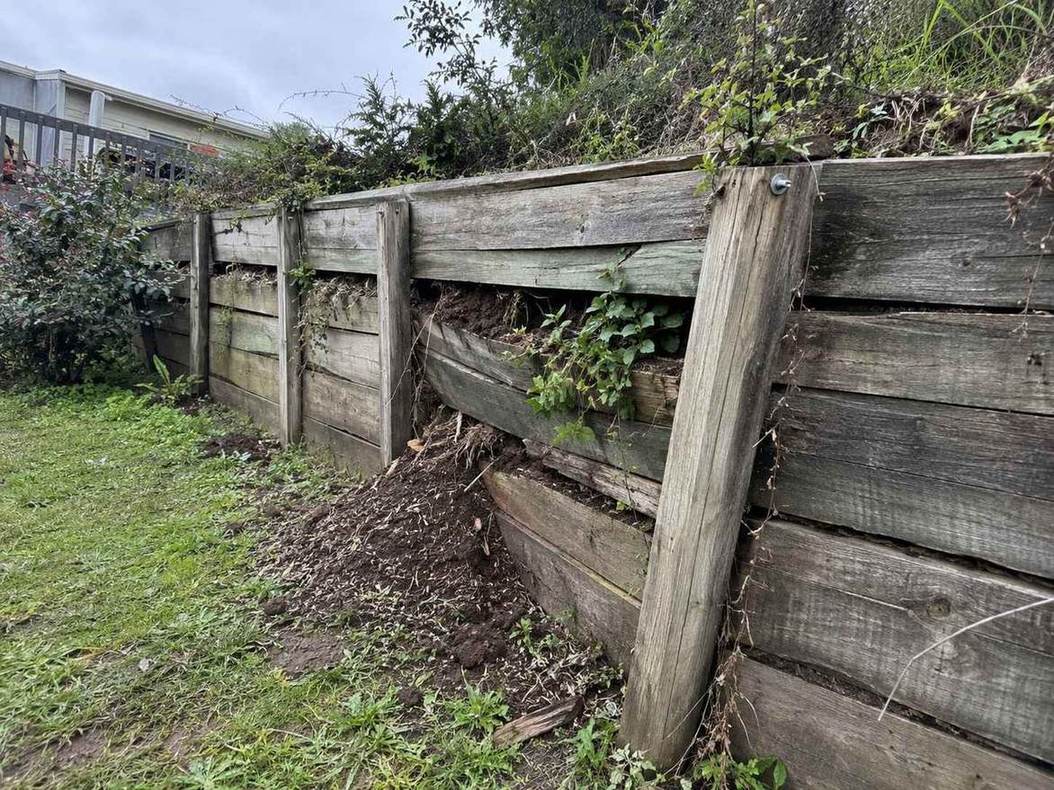
Settled fill behind a timber wall
The wall looks upright but the ground behind it has dropped, sometimes by a surprising amount. Water then ponds in the depression and loads the wall further.
Rotated block walls
A wall that moved at the base and never came back. It often looks stable and is carrying far less than it was designed to.
Collapsed or bulging rock facings
Non engineered rock facings that were never designed as retaining structures. Where these fell they exposed near vertical loess faces behind, which then eroded.
Ground damage rather than wall damage
Toe slumping was documented across the Port Hills after the sequence, a movement type not previously observed in these soils. Where that is what happened, replacing the wall does not address the cause.
Assessing and documenting earthquake damaged retaining walls
We photograph everything before anything is touched, describe the failure mechanism in writing, and where the ground rather than the wall is the problem we say so and recommend a geotechnical engineer rather than quoting a wall.
That documentation matters for insurance, for any residual claim, and for the property file when the house eventually sells.
Rebuilding retaining walls to current Canterbury guidance
A wall replaced today is designed to the current guidance rather than to whatever was acceptable when the original went in. Where the geometry allows, we prop or buttress rather than building a pure cantilever, because that is what the Canterbury evidence supports.
Earthquake Wall Repair at a glance
- Common patterns
- Settled fill, rotated block walls, collapsed rock facings, toe slumping
- Reference
- MBIE guidance on seismic design of retaining structures for Canterbury
- Assessment
- Photographed and described in writing before work starts
- Referred out
- Ground movement, which needs a geotechnical engineer
- Rebuild standard
- Current guidance, propped or buttressed where geometry allows
- Documentation
- Kept for insurance and for the property file
Earthquake Wall Repair in Christchurch: common questions
My wall was damaged in the earthquakes and never fixed. Is it too late?
Not to repair it. Any insurance question depends on your policy and the claim history, which is a separate matter.
Why did some walls survive and others not?
Engineered block walls generally did well, especially propped or buttressed ones. Non engineered rock facings largely did not.
What if the ground moved rather than the wall?
Then the wall is a passenger and a new wall will not fix it. That needs a geotechnical engineer first.
Will a new wall be built differently?
Yes, to current guidance, and propped or buttressed rather than pure cantilever where the geometry allows.
Is it too late to repair earthquake damage from 2011?
Not to repair the wall. Whether any insurance avenue remains depends entirely on your policy and claim history, which is a separate question and one for your insurer rather than us. What we see regularly is walls that were patched at the time and are now failing for the second time.
Why did some walls survive the earthquakes and others not?
MBIE's Canterbury guidance is specific about it. Engineered concrete block walls generally performed well, propped and buttressed ones better again. Retained fill settled significantly behind flexible timber pole walls. Many non engineered rock facings collapsed outright. The pattern is that engineered structures did their job and facings did not.
What if the ground moved rather than the wall?
Then the wall is a passenger and replacing it does not address the cause. GNS documented toe slumping across the Port Hills in the foot slope positions of valleys, a movement type not previously observed in these soils. Where we see that we recommend a geotechnical engineer rather than quoting a structure that will move again.
Recent Christchurch jobs
Boundary wall between us and the neighbour on a new build. Sorted the levels, the consent question and the fence on top in one job. Turned up when they said and left the site clean every night.
Builder here. I use them on subdivision work because the paperwork comes back complete. PS1 up front, PS4 at the end, no chasing.
Wall failed after the big rain and took part of the bank with it. Made safe within two days and rebuilt a month later with real drainage behind it.
Terraced the back lawn into two levels. Fast, tidy, fair price, and the drainage was done properly.
Get a price for earthquake wall repair in Christchurch
Free site visit, a fixed written quote, and a straight answer on what the wall actually needs.
Start your quote
Four questions and you are done.