Retaining Wall Backfill and Compaction in Christchurch
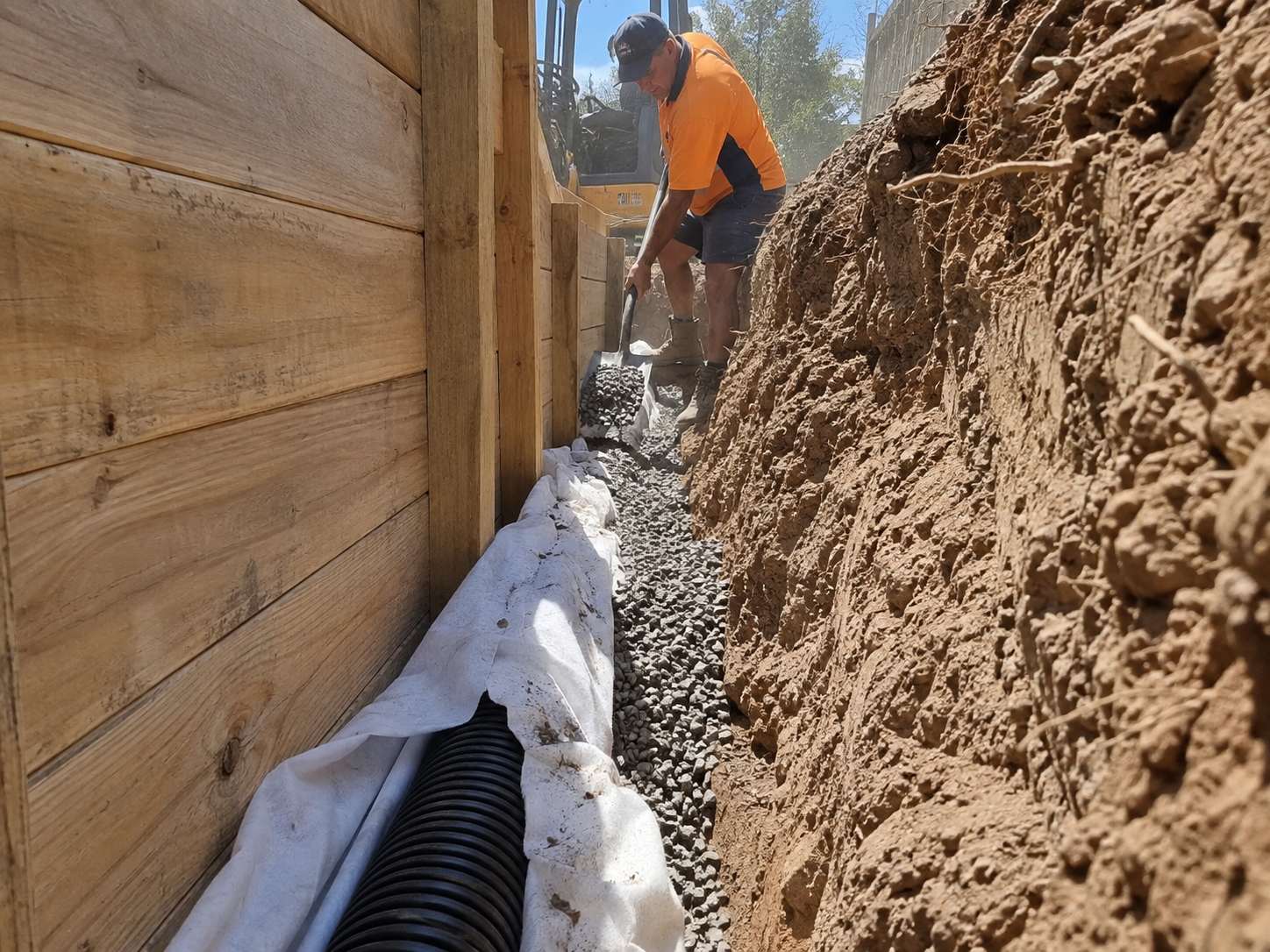
Top Retaining Walls Christchurch places and compacts the backfill behind every wall we build. Free draining material in the drainage zone, suitable fill above that, placed in layers and compacted as the wall goes up rather than pushed in at the end.
- Placed and compacted in layers, not tipped in
- Free draining material behind the wall
- Tested and recorded on engineered work
Get your free quote
Four quick questions. Most quotes come back within a couple of days.
Backfill is the least visible part of a retaining wall and one of the most consequential. Fill that was tipped in loose settles over the following years, which drops the ground behind the wall, opens a gap for water to pond in, and loads the wall with material that is no longer behaving the way the design assumed.
How retaining wall backfill should be placed and compacted
In layers, as the wall rises
Fill goes in in lifts and each lift gets compacted before the next. Compacting a metre of loose fill from the top does not work, because the compactive effort does not reach the bottom.
The drainage zone stays clean
Free draining metal directly behind the wall with geotextile separating it from the general fill. Mixing the two defeats the drainage entirely.
Compaction near the wall
Heavy plant compacting right against a new wall can push it. Close to the wall the compaction is done with smaller equipment, which is a detail that separates a wall built properly from one that was pushed out of plumb on the last day.
What material can go behind a retaining wall
Free draining granular material in the drainage zone, always. Above that, suitable site material can often be reused provided it is not topsoil, not organic and not saturated clay.
On engineered walls the fill specification comes from the design, and on geogrid reinforced walls it is structural, because the grid develops its capacity through friction with the fill.
Testing and recording compaction on engineered retaining walls
On consented and engineered work, compaction is tested and the results recorded. On a house platform those records become part of the building file.
On a domestic garden wall nobody is testing anything, which is exactly why doing it properly comes down to whether the person building it cares.
Backfill and Compaction at a glance
- Method
- Placed in lifts and compacted as the wall rises
- Drainage zone
- Free draining metal with geotextile separating it from general fill
- Near the wall
- Smaller compaction equipment so the wall is not pushed
- Unsuitable material
- Topsoil, organic material and saturated clay
- Engineered walls
- Fill specification comes from the design
- Geogrid walls
- Compaction is structural and is tested and recorded
Backfill and Compaction in Christchurch: common questions
Why does backfill matter so much?
Loose fill settles, which drops the ground behind the wall and lets water pond exactly where you do not want it.
Can the excavated soil go back in?
Often above the drainage zone, provided it is not topsoil, organic or saturated clay.
Why compact in layers?
Because compacting from the top of a deep loose lift does not reach the bottom.
Is compaction tested?
On consented and engineered work, yes, and the results are recorded.
Why compact backfill in layers rather than all at once?
Because compactive effort does not reach the bottom of a deep loose lift. Running a plate over a metre of loose fill compacts the top 150mm and leaves the rest to settle over the following years, which drops the ground behind the wall and creates a depression for water to collect in.
How close to the wall can heavy compaction equipment go?
Not right up against it. Heavy plate compactors and rollers working directly against a new wall can push it out of plumb, particularly before the structure has reached full strength. Within about a metre of the wall we use smaller equipment, which is a detail that separates a wall built properly from one that ended up leaning on the last day.
Is compaction tested on a domestic retaining wall?
On consented and engineered work, yes, and the results form part of the record. On an exempt garden wall nobody is testing anything, which is exactly why doing it properly comes down to whether the person building it cares when no one is looking.
Recent Christchurch jobs
Boundary wall between us and the neighbour on a new build. Sorted the levels, the consent question and the fence on top in one job. Turned up when they said and left the site clean every night.
Builder here. I use them on subdivision work because the paperwork comes back complete. PS1 up front, PS4 at the end, no chasing.
Wall failed after the big rain and took part of the bank with it. Made safe within two days and rebuilt a month later with real drainage behind it.
Terraced the back lawn into two levels. Fast, tidy, fair price, and the drainage was done properly.
Get a price for backfill and compaction in Christchurch
Free site visit, a fixed written quote, and a straight answer on what the wall actually needs.
Start your quote
Four questions and you are done.